Finmates
An accounting assistant for the self-employed in Austria and Germany - our own product, from the brand to compliant e-invoicing.
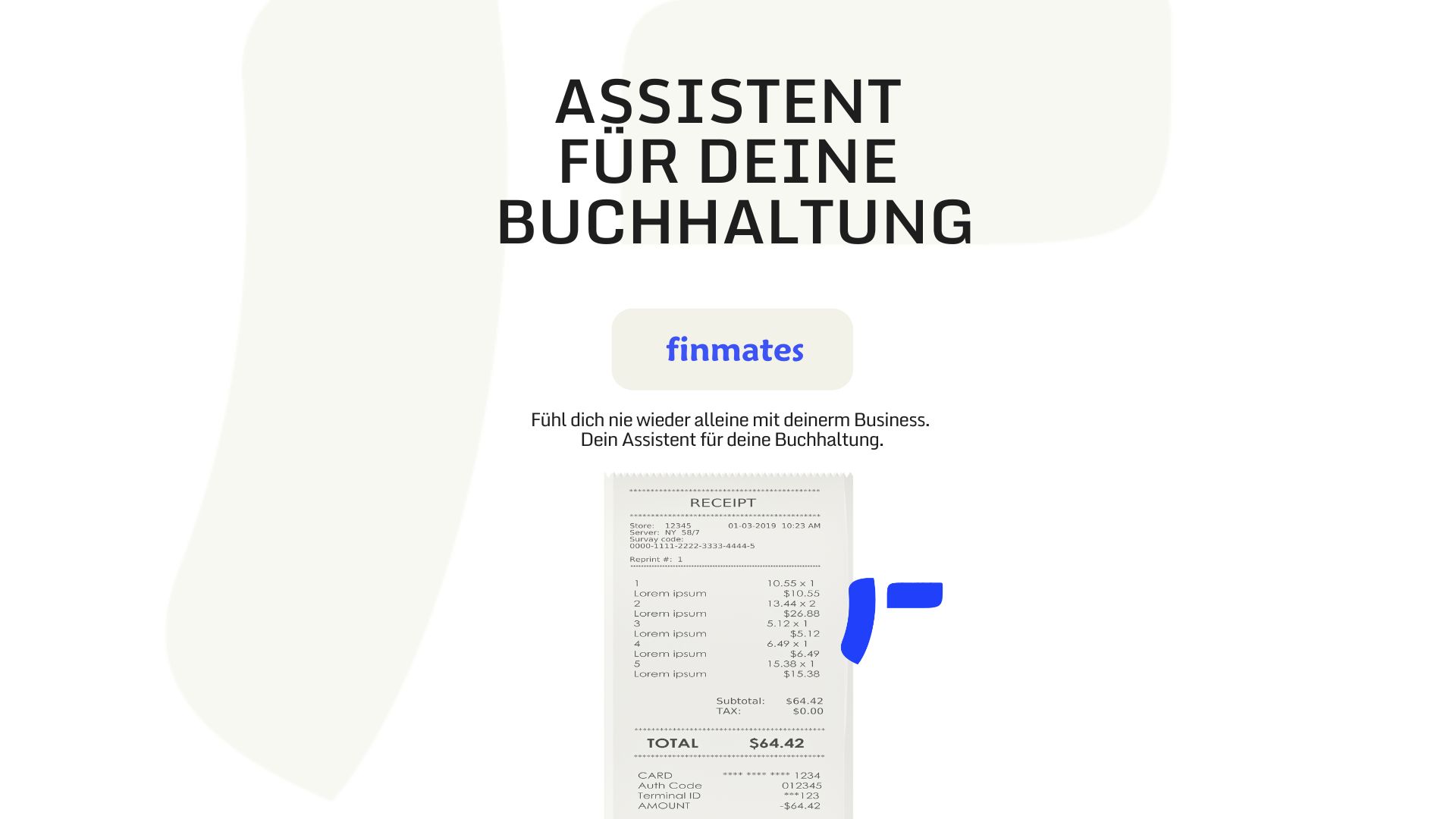
Numbers from the run.
- Industry
- SaaS · accounting
- Role
- Own product
- Timeframe
- In testing since July 2026
- Location
- Austria & Germany
A system instead of a campaign.
For the self-employed, bookkeeping is rarely a knowledge problem and almost always a time problem. Receipts pile up, coding waits for the evening, and eventually somebody is sitting in front of a shoebox. The software on the market is built for accountants, not for the person who would rather be running their business.
On top of that sits regulation with a date on it. Germany is phasing in mandatory e-invoicing, and Austria and Germany use different thresholds, deadlines and wording. Serving both countries calls for the statutory text rather than an opinion.
Finmates is our own product. Nobody commissioned it, so nobody set the scope or the pace either. That is freedom and risk in one: we are the client, the team and the first test group at the same time.
Infrastructure that grows with you.
Our approach: the promise first, then the brand, then the parts that are genuinely hard - and build the visibility in from day one.
A product, not accounting software
The sequence is always the same: photograph the receipt, check the suggestion, post it. The AI identifies supplier, amount and category, but every step stays the user’s decision. Nothing is quietly booked in the background.
E-invoicing that passes validation
Invoices are produced as XRechnung and as a ZUGFeRD invoice inside a PDF/A-3. Validation is not a matter of judgement: the XML runs against the KoSIT reference validator, the PDF against veraPDF. Only when both come back green does the output count as an e-invoice.
An assistant that asks first
Letting the assistant guess would have been the easy route. Instead it asks for the missing details before drafting anything: service period, net or gross, reverse charge on an invoice to another EU country. Posting stays with the human.
Visibility through content
A specialist blog runs alongside the product: more than 25 articles on invoicing rules, e-invoicing, the small-business VAT exemption and deductible expenses, every threshold and deadline evidenced with its statutory provision and year, with Austria and Germany kept apart. The blog is advice, SEO engine and testing ground for our content pipeline at once.
What the system looks like.
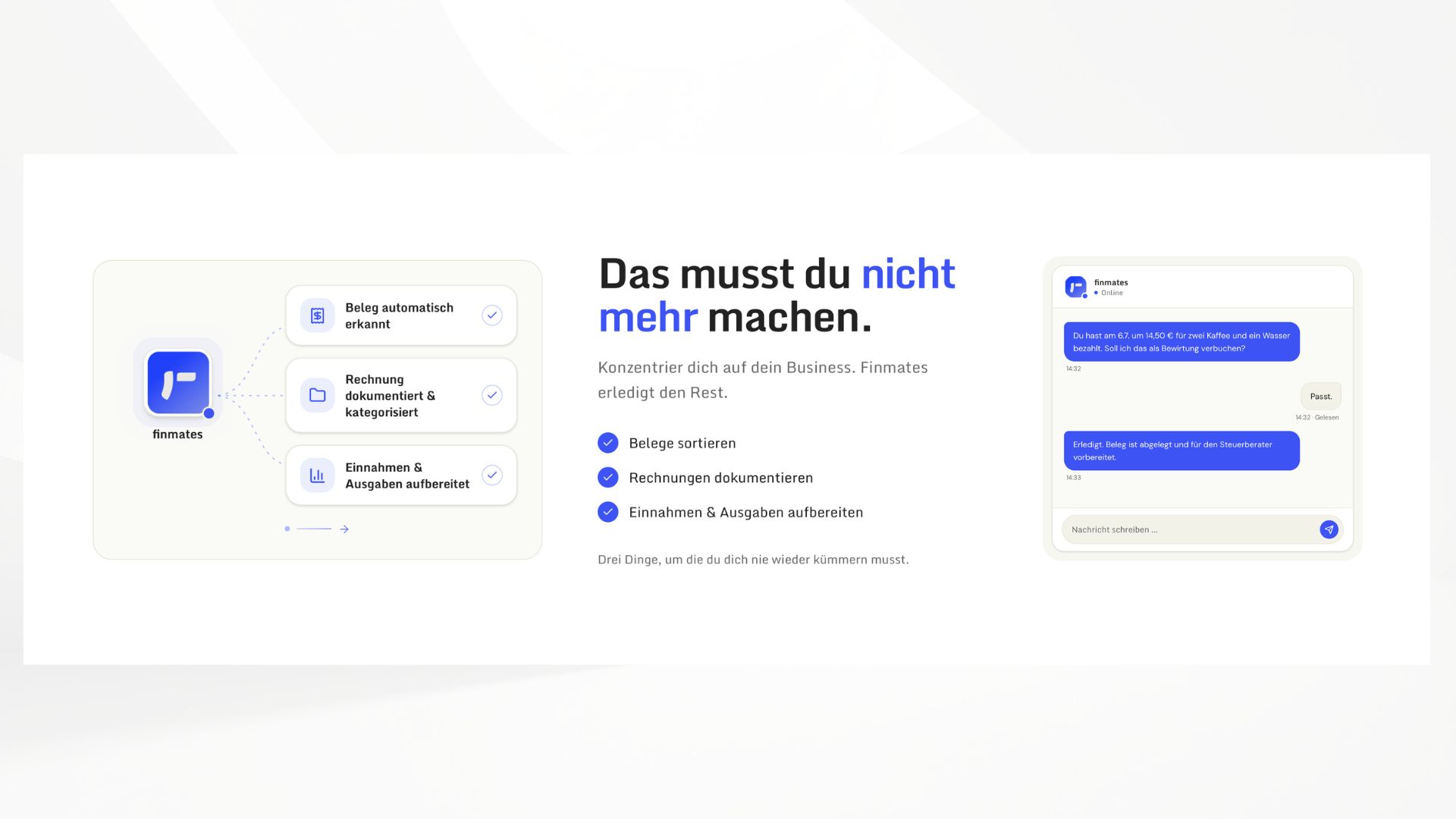
The promise in one imageThree things nobody has to deal with any more: sorting receipts, documenting invoices, preparing income and expenses. Everything else stays a decision. 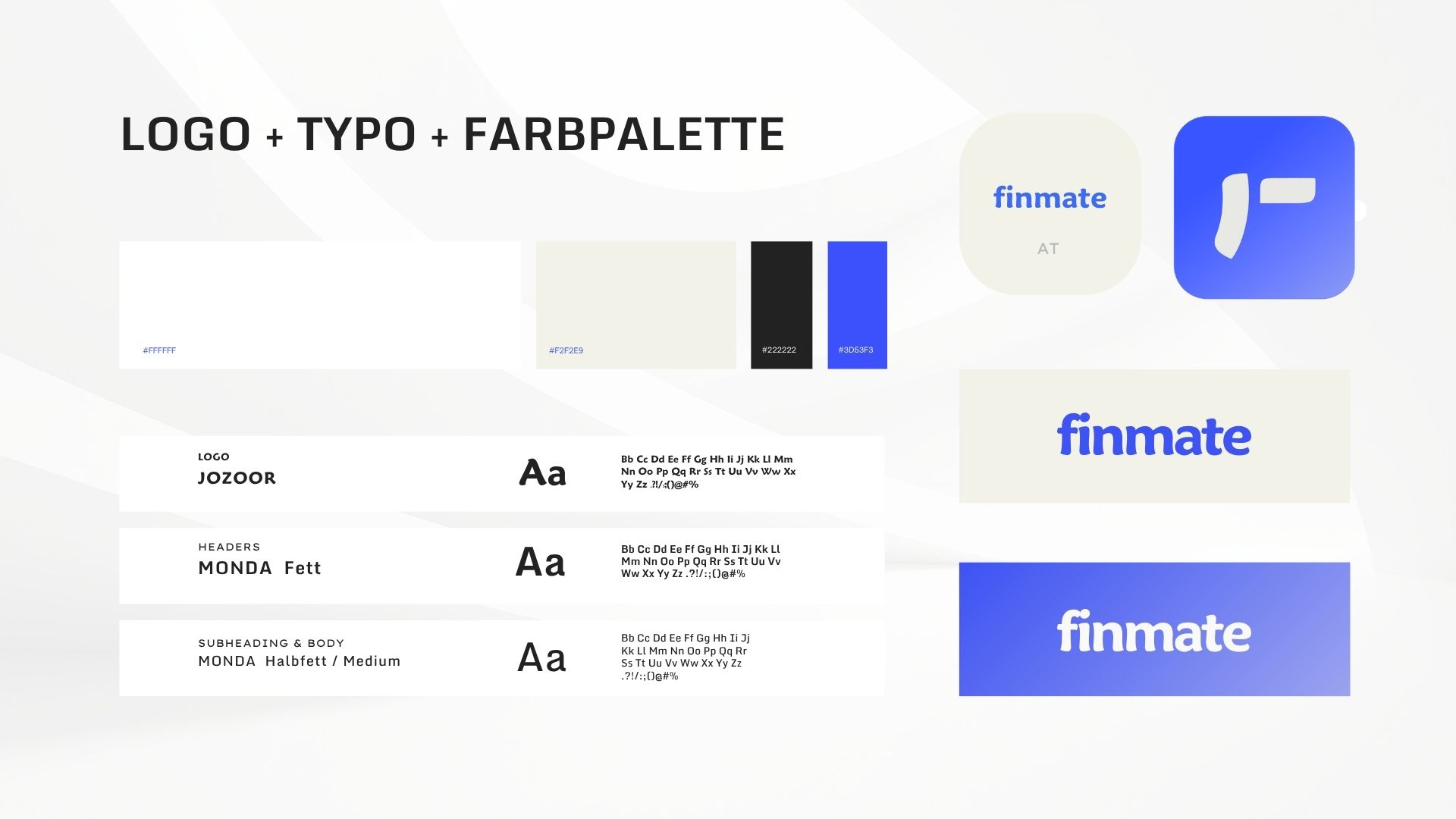
Logo, type, colourLogo, type pairing and palette on a single sheet: blue as the only accent, cream as the quiet ground. The rules are settled before the first screen is built. 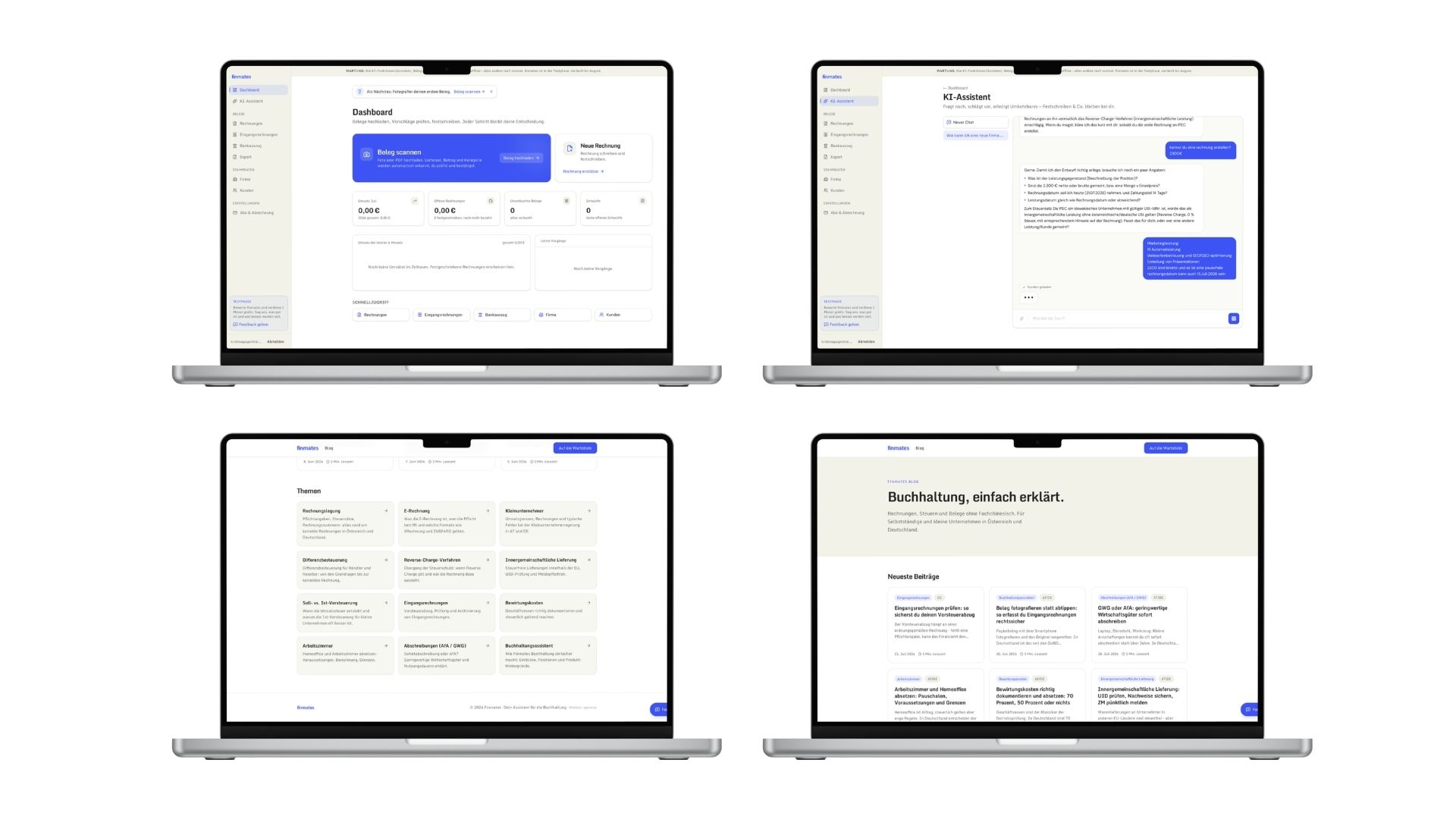
The app in useDashboard, assistant and specialist blog: one language across product and content, so the article and the screen never contradict each other.
Similar project? Let's talk.
A short conversation is enough to see whether a system like this is worth it for you.