
Most brand projects we deal with start with the same question: can you make us a new logo? The answer is almost always: yes - but not now. A logo first is like a roof tile without a house under it. It can be pretty. It still can't carry anything.
This article describes the order in which a brand emerges that holds up for years - and why the logo almost always comes at the end, never at the beginning.
Why is the logo a symptom, not the cause?
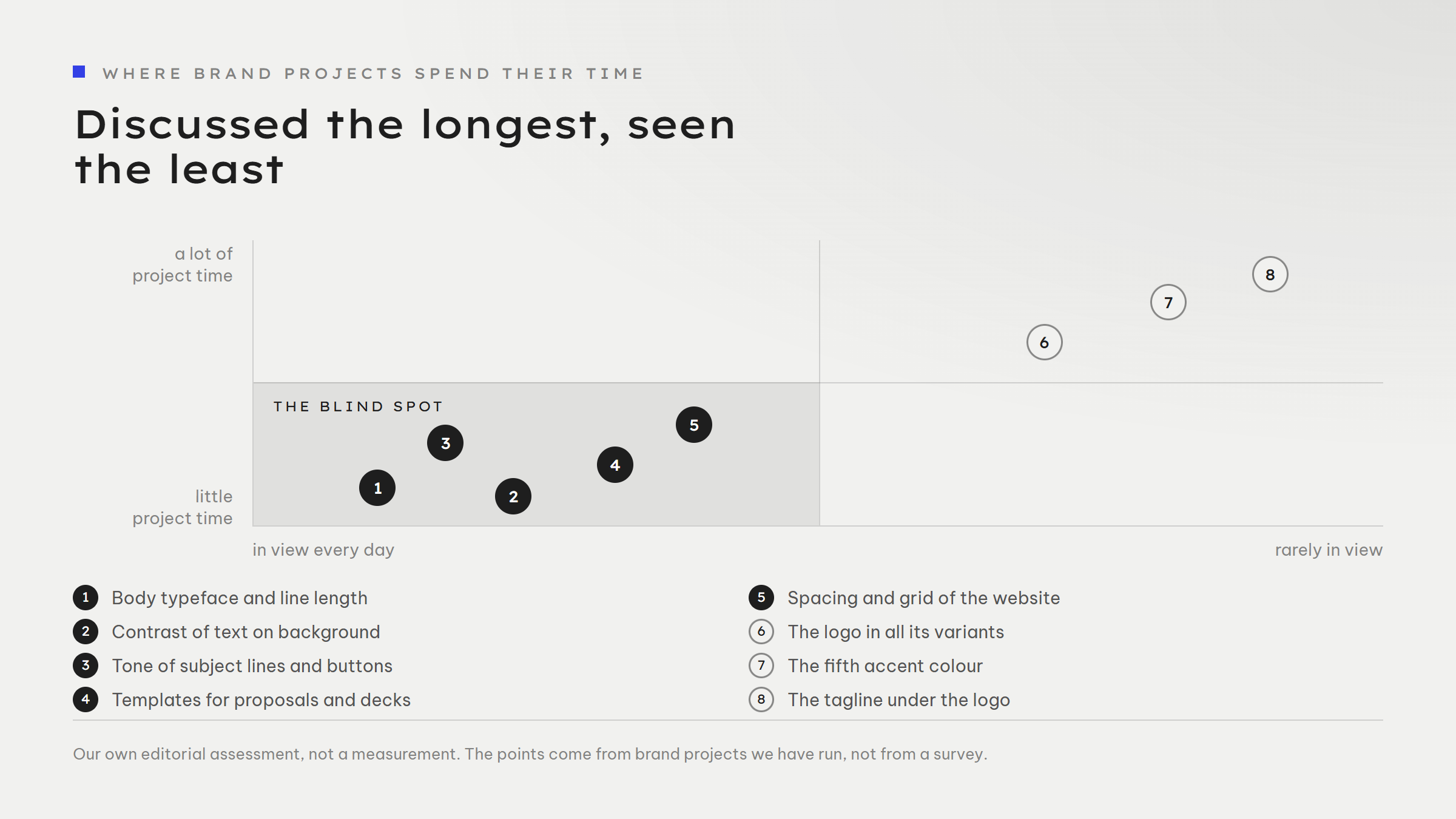
Whoever asks for a new logo usually feels something else: we don't seem current. Our clients don't take us seriously. We look like everyone else. The logo is where this feeling latches on - because it's the most visible single lever. But the cause almost never sits with the logo.
A great logo on an unclear brand only makes the unclarity more visible. A mediocre logo on a sharp brand is carried by context. The leverage sits underneath.
What has to come before design?
Before we open design tools, three things have to be settled: what exactly the company offers - not from its own perspective, but from the perspective of the people buying. To whom exactly it offers it - not small and medium businesses, but a concrete person in a concrete role with a concrete problem. And what it positions itself against - because a brand that doesn't know what it isn't, can't know what it is.
These three answers aren't strategy-workshop word salad. They are the input for every single design decision that follows. Going into design without them clear means paying triple later.
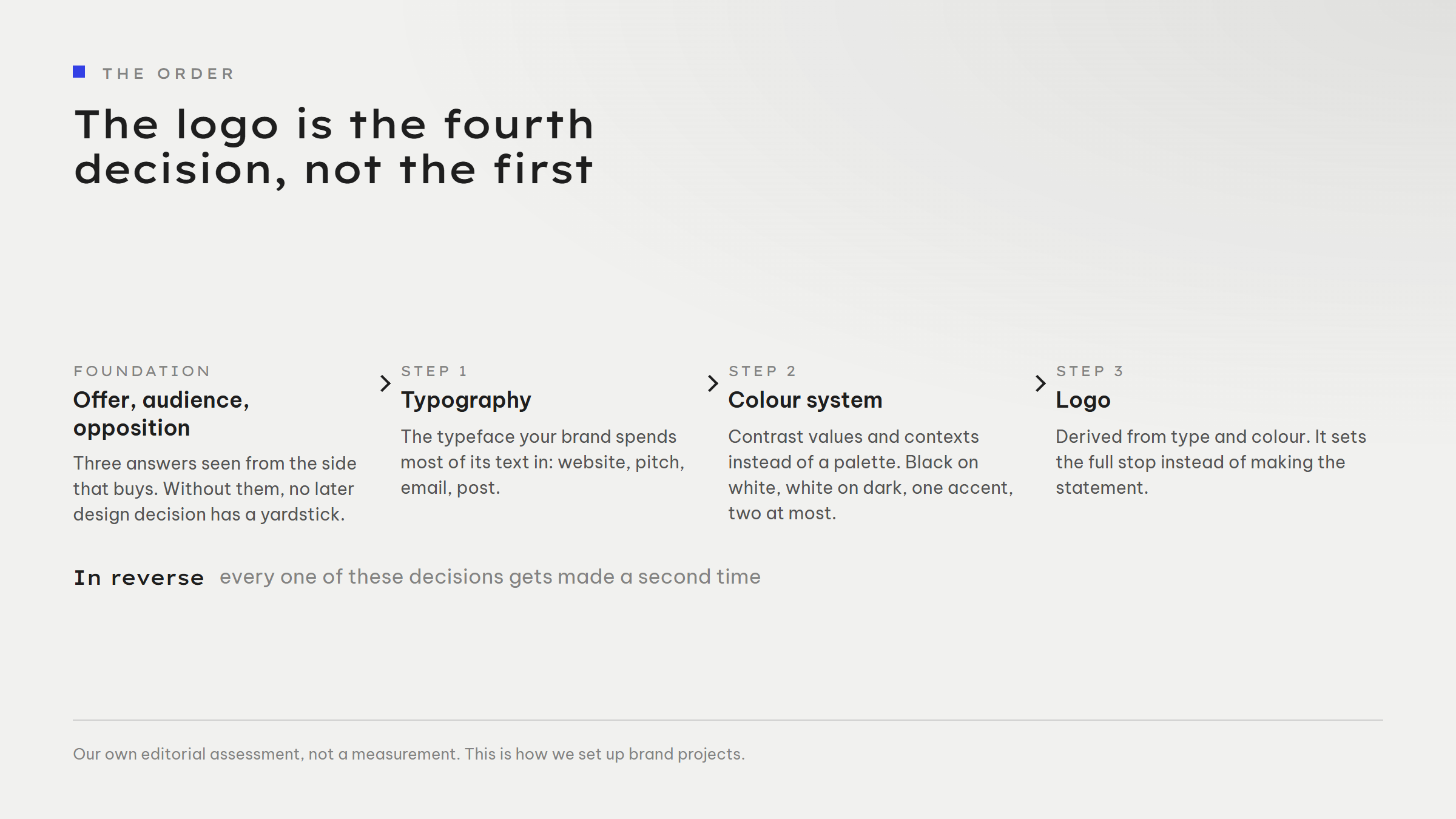
Typography first, colour second, logo third
Once the strategic foundation is in place, the visual phase begins - and it begins with type. Typography is where your brand will spend most of its text: on the website, in pitches, in emails, in social posts. The decision which typeface shapes almost every communication situation; the logo only the fewest.
Colour is second. Not one colour - a colour system that accounts for contrast values, accessibility, and different contexts. Black on white, white on dark, an accent, two at most. The temptation to immediately build a five-colour palette is strong. The temptation is almost always wrong.
The logo comes last. It's derived from typography and colour, not the other way around. When type and colour sit right, the logo delivers the dot the brand no longer needs to explain - not the statement it wants to make.
How do you build a system people can actually use internally?
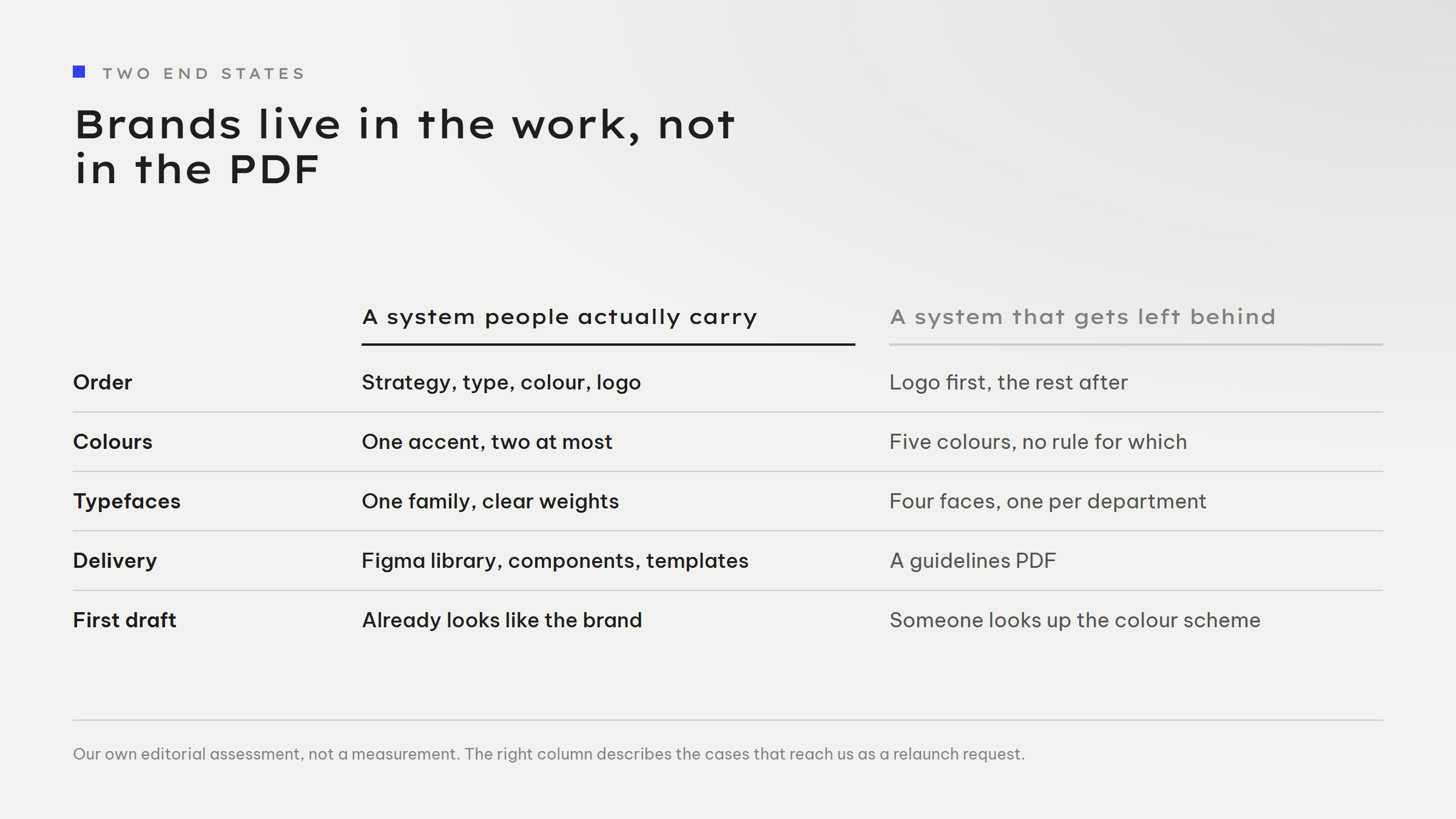
Many brand processes end with a pretty PDF that no one ever opens again. A brand doesn't live in the guidelines document - it lives in the work of those who use it daily: marketing teams, working students, sales, engineering. If those people can't use the brand consistently, the brand system has failed - no matter how pretty the main logo looks.
That's why we don't deliver PDFs but working environments. Notion systems, Figma libraries, component lists, templates. A design system isn't a design exercise, it's a tool.
How can you tell that an identity holds?
An identity that holds doesn't need explanation any more. You recognise it because new materials - a pitch deck, an Instagram reel, a printed poster - already look like the brand in the first draft, without anyone having to look up the colour scheme. That isn't luck. That's the result of a system that was internally understood, because it's small enough to be understood.
A brand with 27 colours, 4 typefaces and 3 logos can't be understood internally. It has already lost before the first post went out.
What's relevant for you?
When a brand project comes up, the most important question in the first week isn't what should the logo look like? It's: are positioning, audience and differentiation clear? If not, the project is starting too early. If yes, the rest is craft - and that's the easy half.
Visual identity isn't the masters' discipline. The masters' discipline comes before. Everything after is decision work in colour, typography and form.